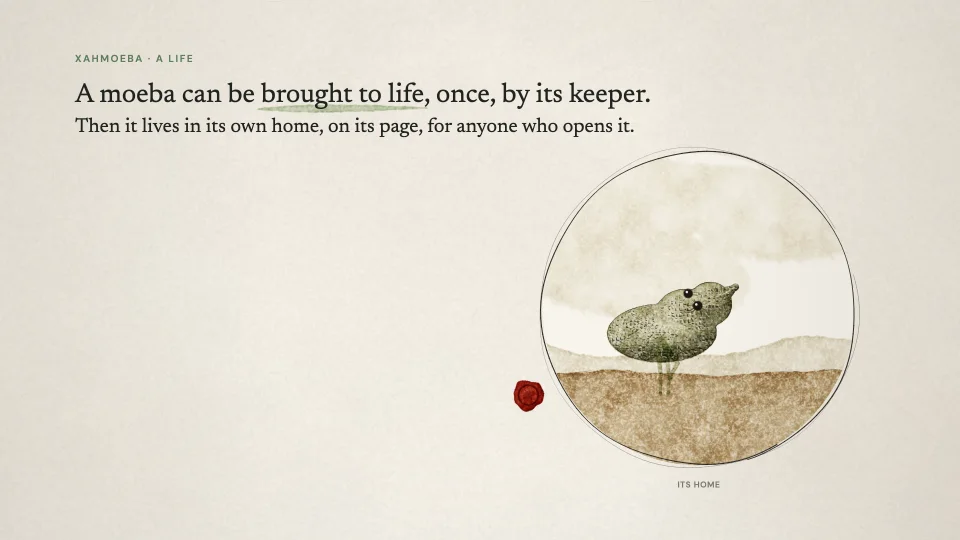
A birth
The parents are sealed in before the seed exists; the seed drives the reading along each parent’s copies; and anyone can work the child out again from the public record.
What the film says
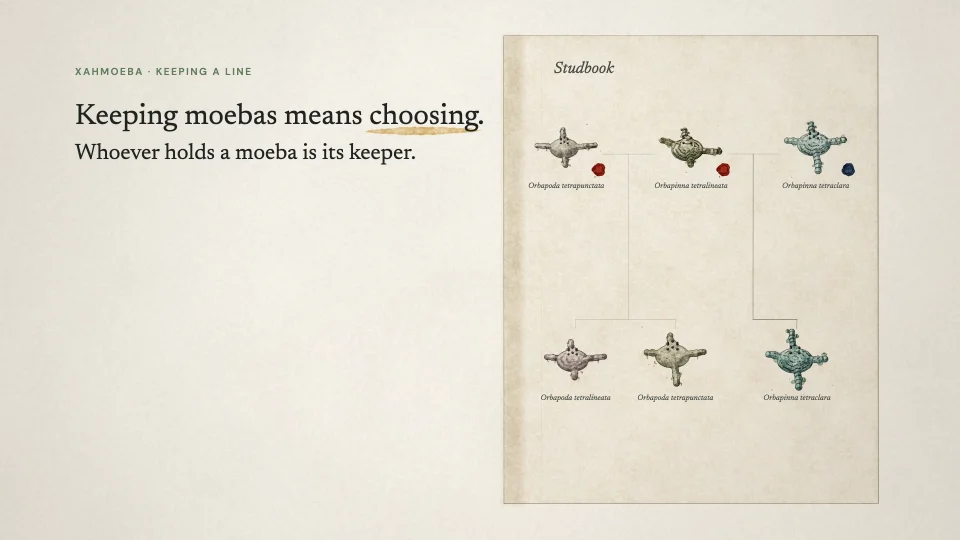
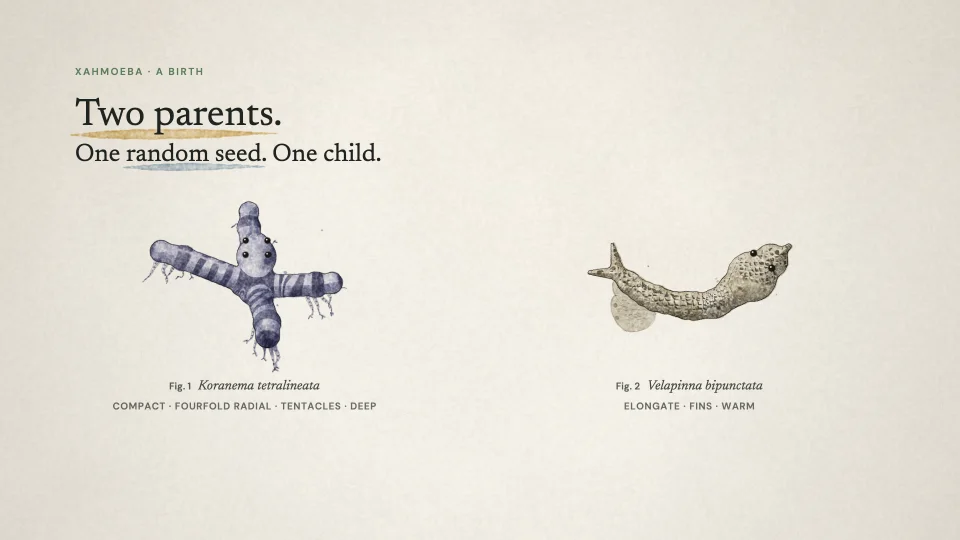
Two parents. One random seed. One child.
The ledger grows ring by ring. Once a ring has grown, nothing in it changes. The request is sealed into one: these two parents. The seed is drawn afterwards, as a later ring grows: the one that captures the birth. Until then it doesn’t exist, for anyone: not the keeper, not the species. And a request can’t bring a seed of its own. Any of these could be the child. The validators draw it together, as that ring grows. The parents were sealed in before it was drawn. Nobody gets to go back.
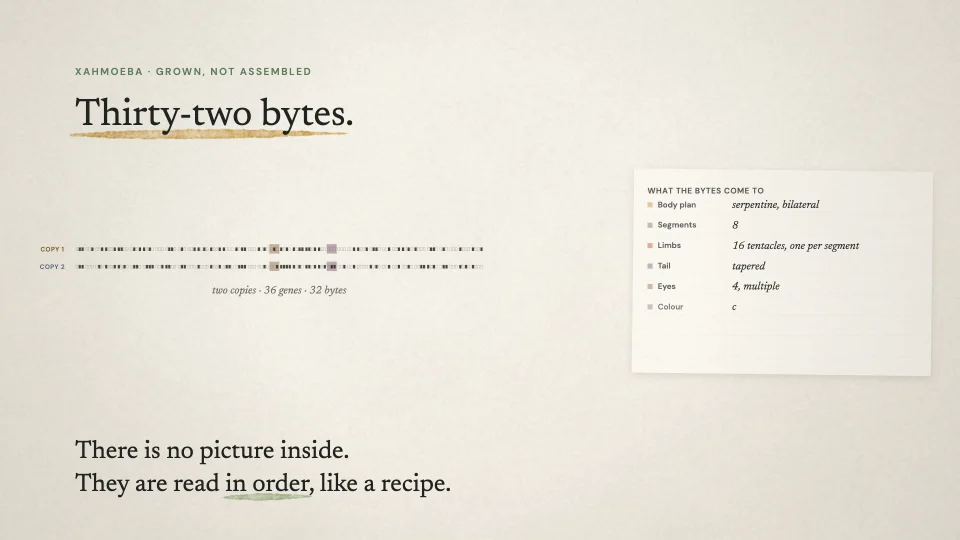
The seed drives the reading: it becomes a stream of numbers. Each parent passes on one copy of every gene; the seed picks the copy each group starts on. At every gene a number is drawn; only a very low one switches copy. Then the other parent, the same way. Switches are rare, so genes that sit together travel together. Now and then a gene changes as it is copied: here, one number gene moved a step.
This child took its build from one parent and its colouring from the other, not a random mix of everything.
Same parents, same seed: the same child, every time. Anyone can work it out again from the public record.
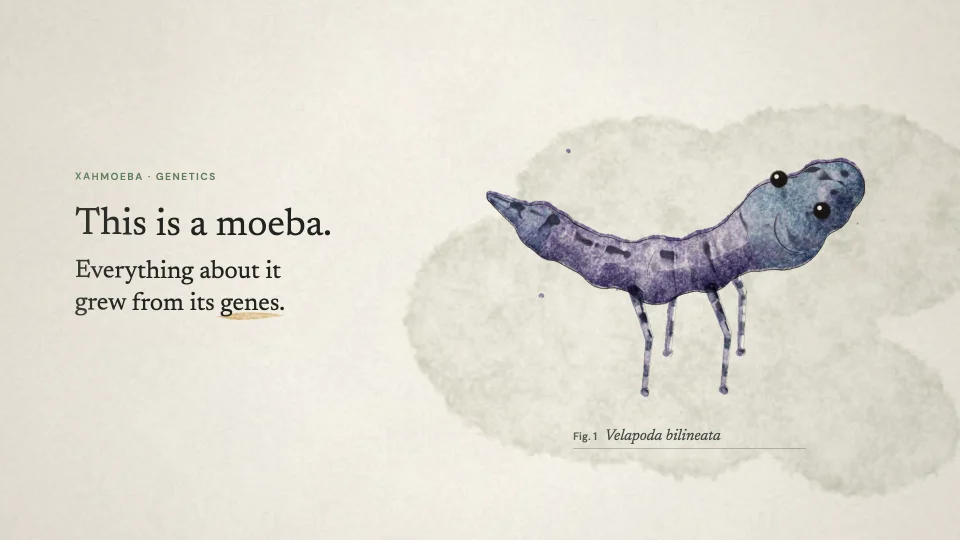
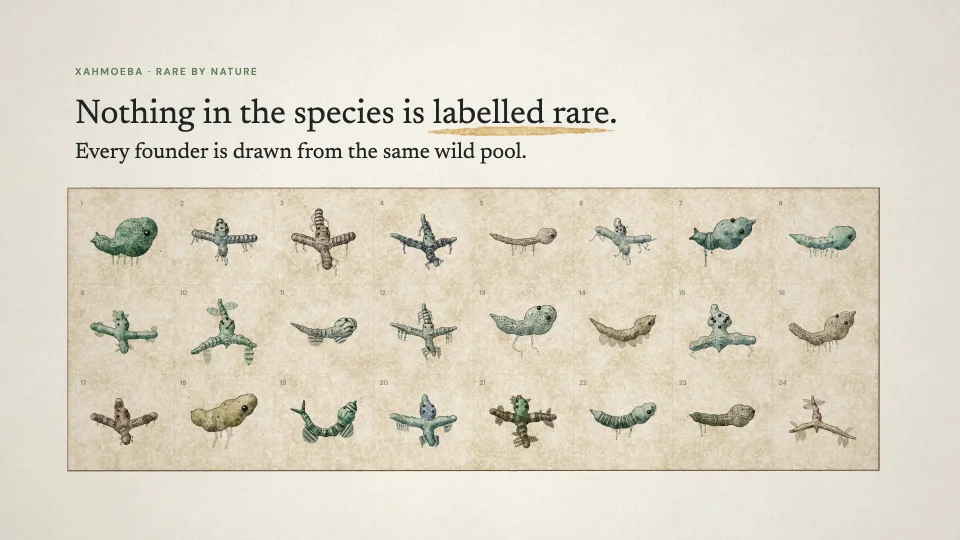
A small species, grown from its genome. Choose the parents. Chance chooses the child. Every genome is written on a public ledger.
The film belongs with A birth, which goes further in words.