Genetics
Two copies of every gene, which one shows, and how two carriers have a child that shows what both of them hide: inheritance in moebas, beside the same idea in people.
What the film says
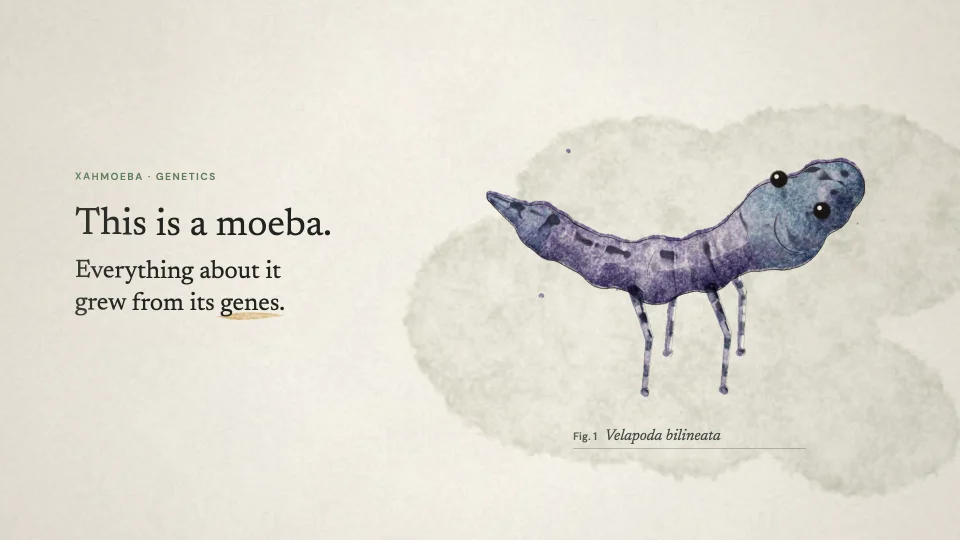
This is a moeba. Everything about it grew from its genes.
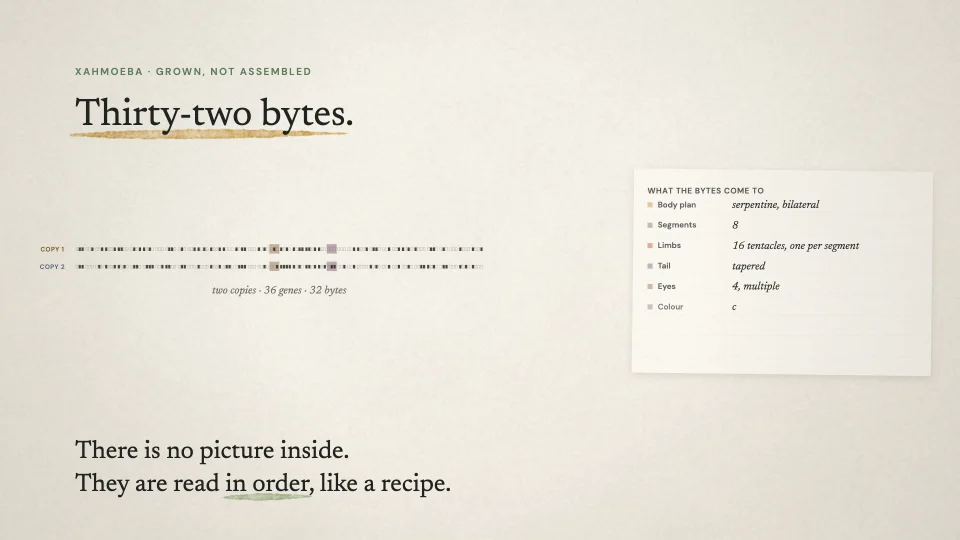
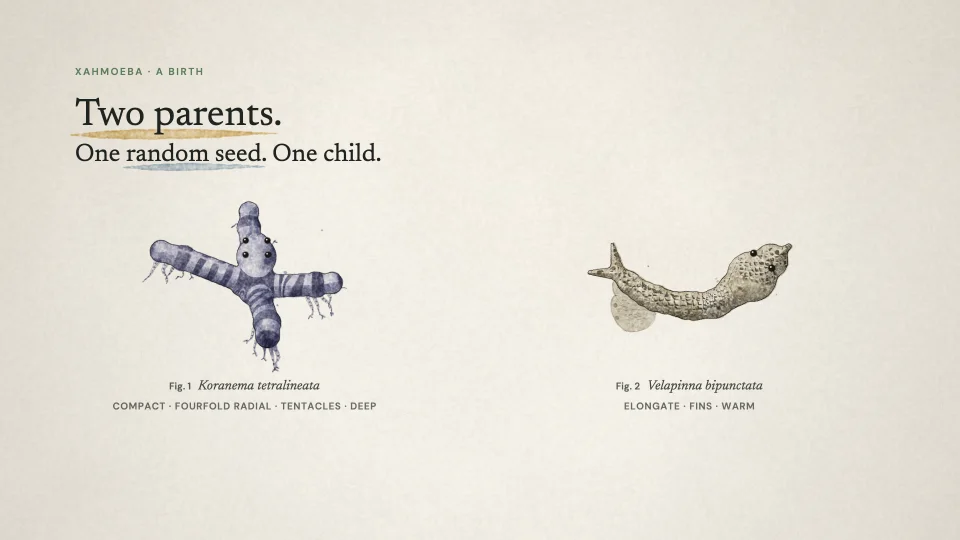
Two copies of every gene — one from each parent. You carry two copies of almost every gene, too.
Yours are written in DNA: about 3 billion letters in each set. A moeba’s whole genome is 32 bytes.
When the two copies differ, only one of them shows. The variants have a fixed order. The higher one shows. The other hides — still there, and can be passed on. Geneticists call these dominant and recessive.
Another moeba hides discoid, too. Each parent passes on one of its two copies, by chance. One child in four gets discoid twice, and shows a body neither parent has. In people, this is how two healthy carriers can have a child with cystic fibrosis.
Four hundred births of the same two parents, worked out with the species’ own rules. Chance lands near one in four.
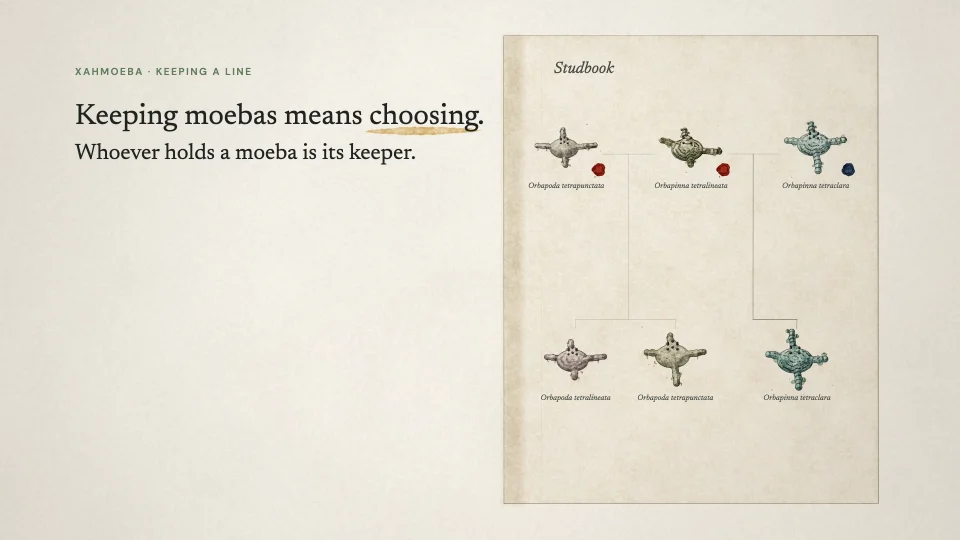
Breed them, and the species changes. Now and then a copy changes at birth: a mutation. Some looks can only arrive this way. Whoever breeds one first, discovers it.
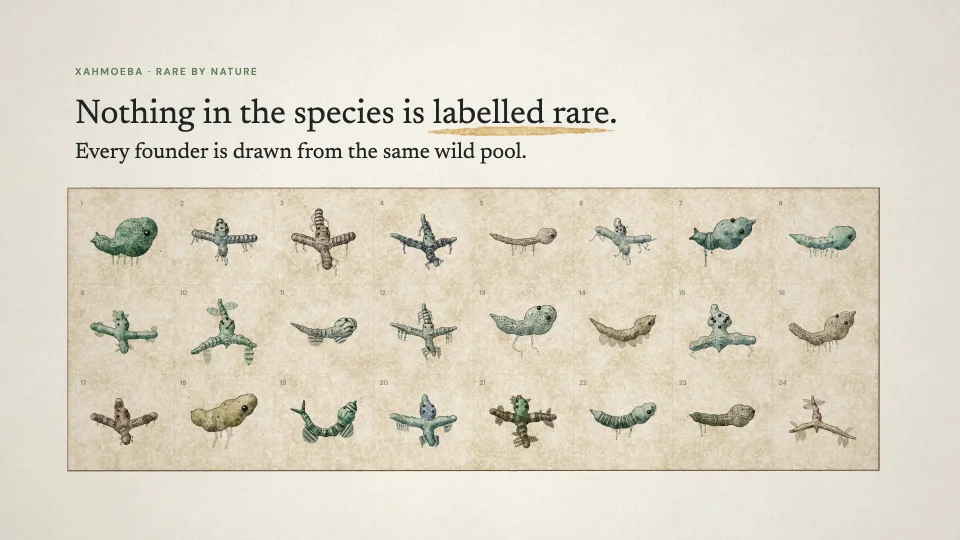
A small species, grown from its genome. Breed one, and see what it hides. Every genome is written on a public ledger.
The film belongs with Genetics in five minutes, which goes further in words.