
How it works
Six short chapters, four of them built around something you can play with. Each is about a thing you can check: the bytes in a token, the transactions on an account, and the records the hooks wrote.
The short version
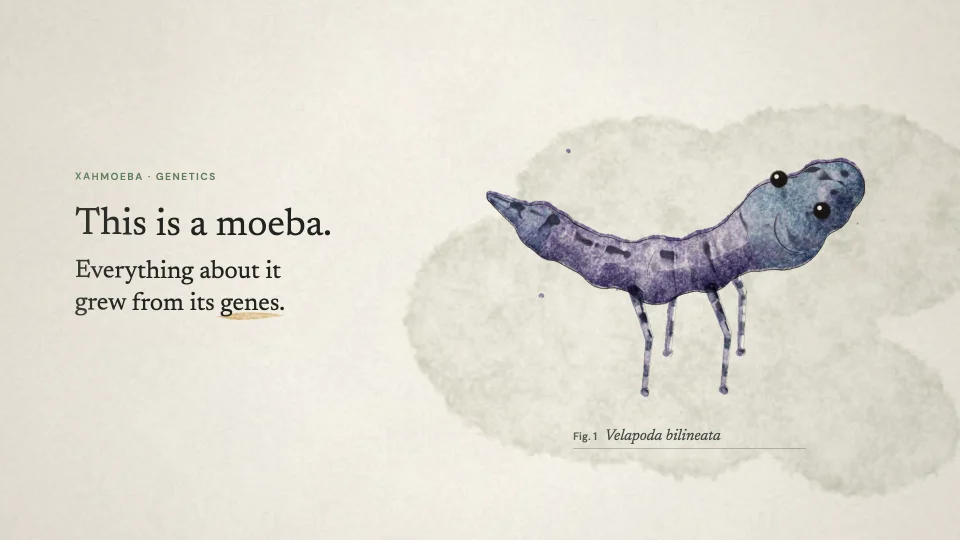
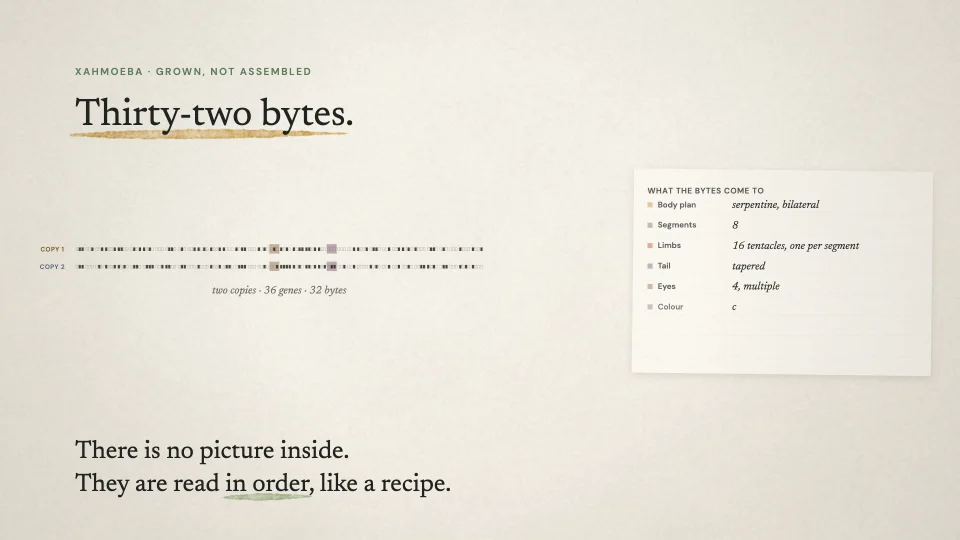
A moeba is grown from 32 bytes. The genome is not a seed for a picture and not a list of looks: it is read through a fixed developmental process — how many segments, where limbs attach, how the head and tail grow, how it moves — that builds one canonical body. The renderer draws that body afterwards and never decides it. Because looks follow from the genome step by step, a child resembles its parents for reasons you can trace.
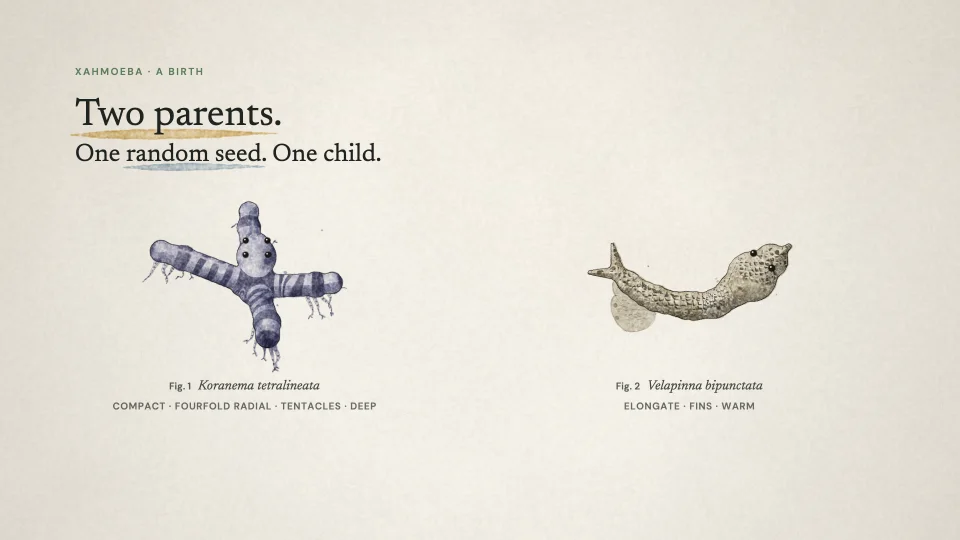
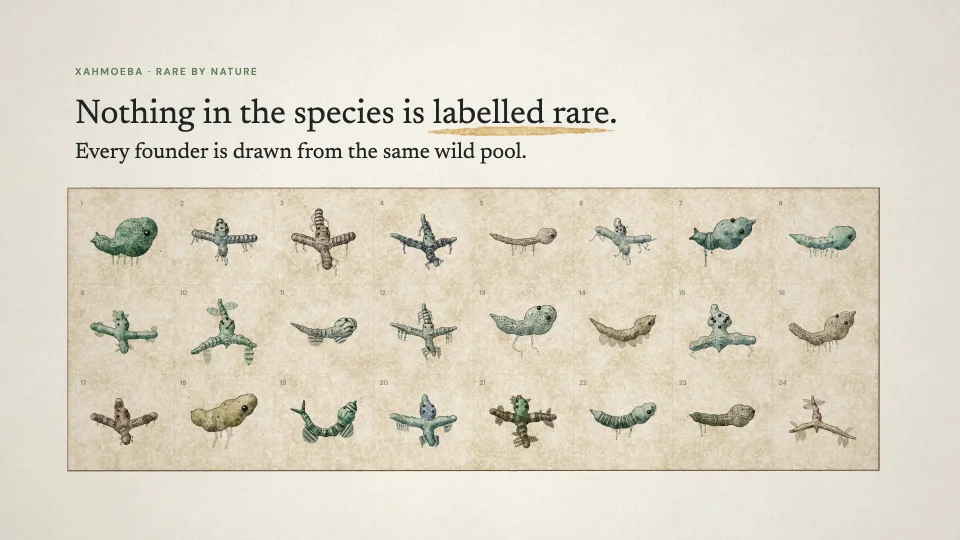
To get a new moeba, a keeper picks two parents — two of their own, or one of theirs and one another keeper has opened to breeding — and sends one payment naming both. Nobody signs anything after that. A minute or a few later the child arrives in the keeper’s account. It is drawn by chance the ledger supplies only after the request, so nobody, not the keeper and not the species’ account, can choose what it will look like. It carries two copies of every gene, one from each parent, and this site shows which parent each part came from. How the ledger does all this is under the hood, in the last two chapters.
The ideas, painted
The creature first, then taking part, then what runs it
The creature
- 00
Genetics in five minutes
Two copies, which one shows, carriers, mutation and small populations: each idea in moebas, with an example from today’s population, beside the same idea in real DNA.
Before the chapters, if genetics is new · with a 1:36 film - 01
The genome
32 bytes, 36 genes, two copies of each. What each part decides, and how a body is read from it.
Try it Turn the dials on a real moeba and watch the body change - 02
A birth
Two parents, one draw of randomness, one child. Recombination, mutation, and what could have been.
Try it Watch a child’s genome being read from its parents, byte by byte
Taking part
- 03
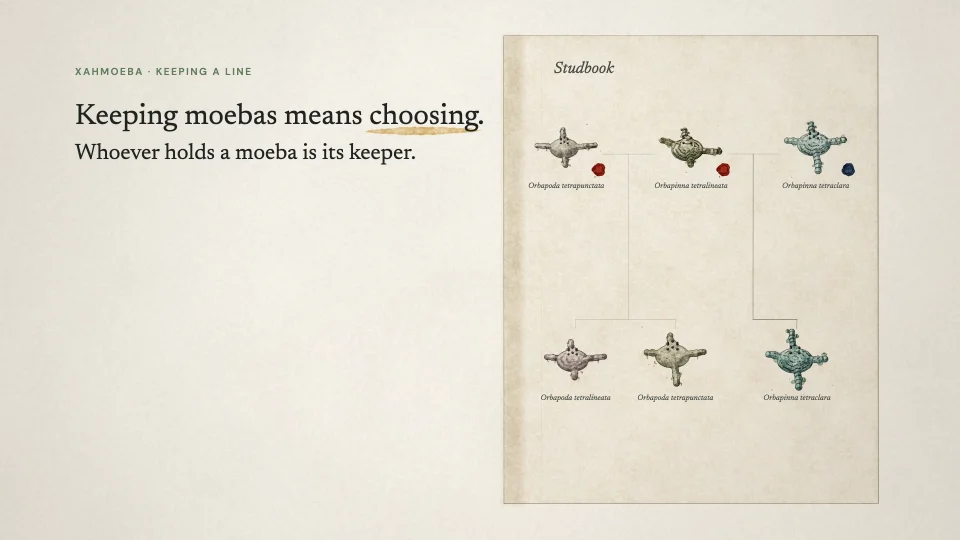
Keeping moebas
Owning, selling, giving, opening to breeding, and burning. What each does to a moeba open to breeding.
Try it Read what each tool on a moeba page does before you sign anything - 04
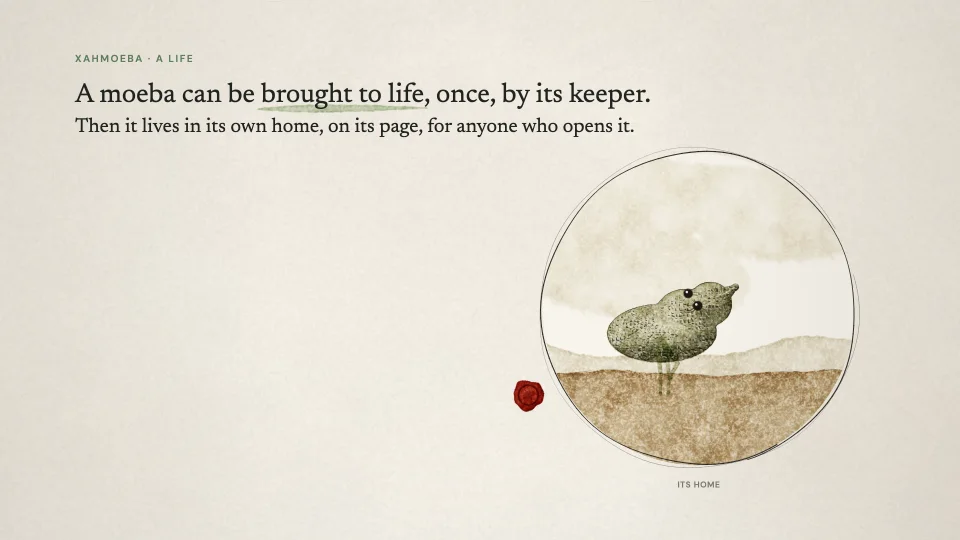
Its life
Brought to life once, it lives in its own home: five needs, care its keeper signs, rest as a pause, a long sleep as the end of its unbroken life, and visits.
Getting started
An account, a first moeba, what a birth costs and how to ask for one. Every step is one transaction any Xahau wallet can sign.
The practical part
Under the hood
- 05
The hooks
Six programs on one account, the clock and the keeper among them. What each does, in what order, and what it refuses.
Try it Drive a birth through its nine stages yourself; burn a parent midway - 06
The randomness
The ledger’s own random number, drawn by the validators together after the parents are sealed, and bound to this request.
Try it A live ledger to ask for a birth in, and where its chance comes in The whitepaper
The whole design in one document: what a moeba carries, why nothing about its appearance is on the ledger, the money, the rules, what the species’ account can and cannot do, and what the rehearsal means.
One long read, for when you want all of itThe protocol
For builders: the bytes of the identity URI, the six records and the genome gene by gene, the rules of expression, the request codes, the API — and a decoder that takes a real moeba apart.
Read a moeba without this site